Direct Anterior Hip Replacement : A Patient’s Guide to the Muscle-Sparing Approach
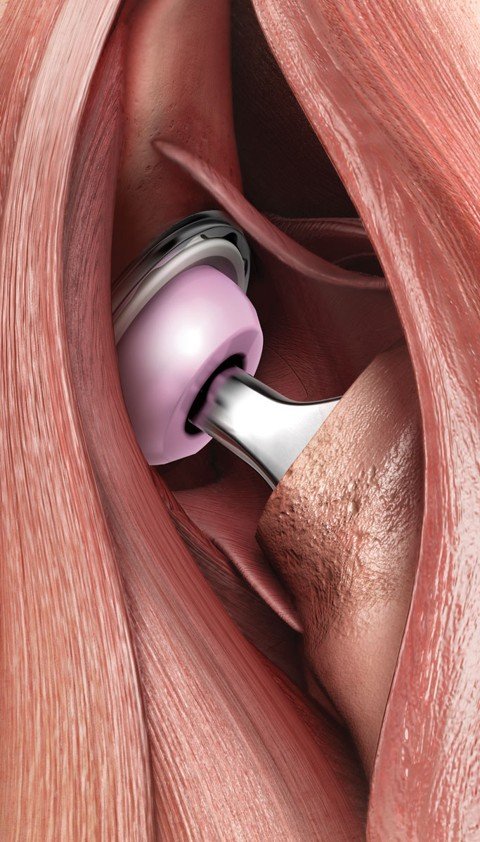
Understanding how the direct anterior approach aims to preserve muscles, minimize tissue disruption, and support faster early recovery after hip replacement surgery.
Total hip replacement is one of the most successful orthopedic procedures for treating patients with severe hip osteoarthritis, osteonecrosis of the femoral head (avascular necrosis), and other hip conditions that cause persistent pain and restricted mobility.
The goal of hip replacement surgery is not simply to replace a damaged joint with an artificial one. It is also to relieve pain, restore mobility, improve walking ability, and help patients regain their quality of life.
Traditionally, the success of hip replacement surgery was primarily measured by pain relief, implant stability, and the long-term durability of the artificial joint.
To achieve accurate implant positioning and adequate surgical exposure, some conventional surgical approaches involve detaching or dividing certain muscles or tendons around the hip. These structures are typically repaired during surgery, but they require time to heal and recover afterward.
Although these established approaches have consistently demonstrated excellent long-term outcomes, recovery may be influenced by the healing of the muscles and soft tissues affected during surgery.
Today, patients expect more than a successful implant. They also hope to experience less postoperative pain, recover more quickly, walk sooner, and return to everyday activities with fewer restrictions.
These changing expectations have encouraged the development and refinement of surgical techniques that aim to minimize soft-tissue disruption while maintaining the accuracy and safety of implant placement.
One such technique is the Direct Anterior Approach (DAA) to total hip replacement, which has gained increasing attention for its muscle-sparing characteristics and potential advantages during early recovery.
What Is Direct Anterior Hip Replacement?
Direct Anterior Hip Replacement is a surgical technique in which the hip joint is accessed from the front of the body rather than from the side or back.
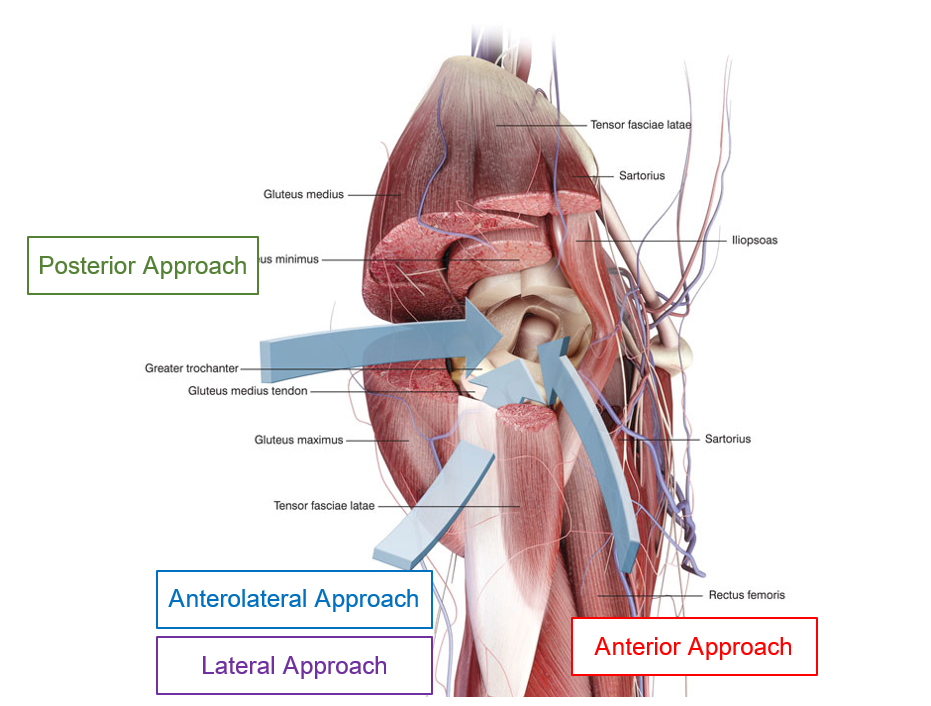
However, the most important difference is not simply the location of the surgical incision. It is how the surgeon reaches the hip joint beneath the skin.
The direct anterior approach uses a natural interval between muscles to access the hip joint. In most routine cases, this allows the surgeon to perform the procedure without detaching the major muscles or tendons surrounding the hip.
This technique is often described as an intermuscular and internervous approach.
- Intermuscular means the surgeon works through the natural space between muscle groups rather than cutting directly through them.
- Internervous means the surgical interval lies between muscles supplied by different nerve branches, helping preserve their nerve supply.
Specifically, the superficial surgical interval lies between the tensor fasciae latae and sartorius muscles, while the deeper dissection is performed between the rectus femoris and gluteus medius region.
By following these anatomical intervals, the surgeon can reach the hip joint while preserving the attachments of the major surrounding muscles.
Nevertheless, DAA is not an entirely tissue-injury-free operation. The procedure still requires opening the hip joint capsule, moving and retracting soft tissues, and preparing the bones for implantation.
In some complex cases, additional soft-tissue releases may also be necessary to achieve safe exposure and accurate implant placement.
The main principle is to minimize unnecessary muscle damage while performing the procedure safely and effectively.
Why Does Muscle Preservation Matter?
The muscles surrounding the hip play a crucial role in almost every movement we make.
They help us walk, maintain balance, stand up from a chair, climb stairs, and perform everyday activities. Certain muscles, particularly the hip abductors, are essential for stabilizing the pelvis and maintaining a normal walking pattern.
When muscles or their tendon attachments are disrupted during surgery, the body requires time to repair these tissues and restore their strength and function.
Even after a successful hip replacement, muscle weakness or discomfort can temporarily affect walking, balance, and mobility.
The philosophy behind the direct anterior approach is therefore to preserve as much of the natural muscle structure as possible, potentially allowing patients to use their muscles more effectively during the early stages of recovery.
However, recovery does not depend on the surgical approach alone.
Preoperative muscle strength, age, general health, severity of hip disease, surgical complexity, and postoperative rehabilitation all contribute to how quickly a patient recovers.
What Are the Potential Benefits of Direct Anterior Hip Replacement?
1. Less Disruption of the Muscles Around the Hip
One of the main advantages of DAA is its muscle-sparing surgical pathway.
Because the surgeon accesses the hip joint through a natural interval between muscles, the procedure generally does not require detachment of the major muscle tendons that may need to be released in certain other surgical approaches.
Preserving these structures can reduce the need for healing at surgically detached tendon attachment sites.
This may contribute to improved comfort and earlier restoration of muscle function, particularly during the initial recovery period.
However, minimizing muscle detachment does not mean that all soft tissues remain completely unaffected.
2. Potentially Faster Recovery During the Early Postoperative Period
Several clinical studies have shown that patients undergoing DAA may experience certain advantages during early recovery compared with patients undergoing other surgical approaches.
Potential benefits include:
- Earlier recovery of basic mobility and functional activities
- Less postoperative pain during certain stages of recovery
- Shorter hospital stays in some patient populations
- Earlier improvement in walking ability and gait function
These differences tend to be most noticeable during the first days or weeks after surgery.
As recovery progresses, the differences between surgical approaches often become smaller. By several months after surgery, many studies have found comparable functional outcomes between DAA and other established techniques.
3. Early Walking and Mobilization
One of the important goals following hip replacement surgery is to help patients stand and walk as soon as it is medically safe.
With DAA, many patients can begin standing and walking with a walker or crutches on the day of surgery or the following day.
Early mobilization helps restore confidence, activate muscles, promote circulation, and reduce complications associated with prolonged bed rest.
However, early walking is not exclusive to DAA. Modern rehabilitation protocols also encourage early mobilization after other surgical approaches.
The decision to begin walking should always consider the patient’s blood pressure, pain control, dizziness, muscle strength, alertness, and overall medical condition.
The goal is not to walk as far or as quickly as possible, but to begin walking safely with good movement patterns.
4. Potentially Fewer Postoperative Movement Restrictions
After hip replacement surgery, certain movements may increase the risk of hip dislocation, particularly during the early postoperative period.
Depending on the surgical approach, implant stability, and individual risk factors, some patients may be advised to avoid specific movements while healing occurs.
Because the direct anterior approach generally preserves the posterior soft-tissue structures of the hip, surgeons may allow patients to resume normal movements and everyday activities with fewer routine restrictions.
This can make activities such as sitting, standing, dressing, and getting in or out of a chair more convenient during recovery.
Nevertheless, DAA does not eliminate the risk of hip dislocation.
Patients should still follow their surgeon’s specific instructions, particularly regarding extreme hip movements and activities that place excessive stress on the joint.
5. Intraoperative Assessment of Implant Position and Leg Length
The direct anterior approach is commonly performed with the patient lying on their back (supine position).
This position allows the surgeon to assess leg length and, when appropriate, use intraoperative fluoroscopy (real-time X-ray imaging) to evaluate implant placement.
Fluoroscopy may assist in assessing:
- Acetabular cup position and orientation
- Femoral component alignment
- Leg-length differences
- Hip offset and the relationship between implant components
These assessments can help the surgeon make adjustments during the operation when necessary.
However, accurate implant positioning depends primarily on careful preoperative planning, sound surgical judgment, and technical experience.
Intraoperative imaging is a useful tool, but it does not replace surgical expertise, nor does it guarantee perfect implant positioning or equal leg lengths.
Is Direct Anterior Hip Replacement a Minimally Invasive Procedure?
Many patients associate direct anterior hip replacement with minimally invasive surgery, often assuming that a smaller incision automatically means a better operation.
Although DAA can often be performed through a relatively short incision, the true meaning of minimally invasive surgery extends beyond the size of the skin incision.
A smaller incision does not necessarily indicate less damage to the deeper tissues.
In fact, making the incision excessively small may limit visibility, increase soft-tissue retraction, and make accurate implant positioning more difficult.
The important considerations are how the surgeon accesses the joint, how much the surrounding muscles and soft tissues are disturbed, and whether the implants can be positioned safely and accurately.
Therefore, the goal of DAA is not to create the shortest possible incision.
Instead, it is to achieve a safe, effective hip replacement while minimizing unnecessary tissue disruption.
A successful minimally invasive procedure is defined by how carefully the tissues are treated, not simply by how small the scar appears.
What Are the Limitations and Risks of Direct Anterior Hip Replacement?
Although DAA offers several potential advantages, it is not risk-free and may not be the best approach for every patient.
The procedure requires detailed anatomical knowledge, appropriate surgical instruments, and specific technical expertise.
The surgeon must obtain adequate exposure of both the acetabulum and femur while protecting the surrounding muscles, nerves, and other soft tissues.
Some potential risks and limitations include the following.
Numbness or Altered Sensation Along the Front or Outer Thigh
The lateral femoral cutaneous nerve (LFCN), which provides sensation to the front and outer portion of the thigh, runs close to the surgical pathway.
During DAA, this nerve or its branches may be stretched, irritated, or injured.
As a result, some patients may experience numbness, tingling, burning, or altered sensation around the front or outer thigh.
These symptoms often improve over time, although some patients may experience persistent sensory changes.
This complication generally affects sensation rather than the strength of the major muscles responsible for walking.
Femoral Fracture or Difficulty Accessing the Femur
Preparing the femur for implantation can be technically demanding during DAA because the surgeon must elevate and position the upper femur to obtain adequate access.
In certain patients, particularly those with severe deformity, osteoporosis, previous surgery, or challenging anatomy, femoral preparation may be more difficult.
Potential complications include femoral fracture, cortical perforation, or implant malposition.
Careful surgical technique, appropriate instruments, and adequate exposure are essential to reduce these risks.
Wound-Healing Problems
The anterior surgical incision is located near the front of the hip, where the surrounding soft tissues and skin folds may influence wound healing.
Patients with significant obesity, particularly those with substantial abdominal or anterior hip soft tissue, may have an increased risk of wound irritation, moisture accumulation, delayed healing, or infection.
These factors should be considered during preoperative planning and postoperative wound care.
General Risks of Hip Replacement Surgery
Like all hip replacement procedures, DAA carries general surgical risks, including:
- Infection
- Bleeding or hematoma
- Deep vein thrombosis or pulmonary embolism
- Intraoperative or postoperative fracture
- Hip dislocation
- Leg-length discrepancy
- Implant loosening or wear over time
- Persistent pain or the need for future revision surgery
The likelihood of these complications varies depending on patient characteristics, medical conditions, surgical complexity, and surgeon experience.
Is Direct Anterior Hip Replacement Suitable for Everyone?
Many patients with hip osteoarthritis, osteonecrosis of the femoral head, and other conditions requiring total hip replacement can be considered for DAA.
However, some patients present anatomical or technical challenges that require additional planning.
Examples include:
- Severe deformity of the hip joint or femur
- Previous hip surgery
- Severe hip stiffness or ankylosis
- Significant obesity or substantial soft tissue around the planned incision
- Complex cases requiring specialized implants or reconstructive techniques
- Retained orthopedic hardware around the hip, particularly hardware located posteriorly or requiring removal through a different surgical exposure
These conditions do not automatically rule out DAA.
For example, patients with severe hip deformity or retained implants may still undergo DAA successfully when the surgical anatomy, reconstruction requirements, and surgeon’s experience make it appropriate.
However, some situations may be better managed using another surgical approach or a combination of approaches.
The decision should be individualized based on the patient’s anatomy, diagnosis, previous operations, overall health, and the surgeon’s expertise.
The best surgical approach is not necessarily the newest or most popular technique, but the one that allows the surgeon to perform the safest and most effective hip replacement for that individual patient.
What Is Recovery Like After Direct Anterior Hip Replacement?
Recovery after DAA varies from person to person.
Although some patients recover rapidly, others require more time depending on their preoperative mobility, muscle strength, age, medical conditions, and the complexity of surgery.
The following timeline provides a general overview rather than a fixed recovery schedule.
Day of Surgery to the First Postoperative Day
If the patient’s medical condition is stable, sitting, standing, and walking with a walker or crutches may begin on the day of surgery or the following day.
These activities should initially be performed under the supervision of trained healthcare professionals.
The main goal at this stage is to establish safe movement, assess balance, and help the patient become comfortable with early mobilization.
Walking distance is less important than safety, stability, and proper technique.
The First 1–2 Weeks
During the first two weeks, patients generally begin increasing their walking distance and gradually return to basic daily activities.
Some discomfort around the incision, tightness in the front of the thigh, swelling, and temporary muscle weakness are common.
These symptoms usually improve gradually as healing progresses.
Walking aids should be continued as needed to maintain stability and avoid limping.
Weeks 2–6
During this period, many patients experience noticeable improvements in walking ability, balance, and confidence.
Some may gradually reduce their dependence on walkers or crutches when they can walk safely with adequate muscle control and without significant limping.
Returning to driving, work, and other activities depends on several factors, including:
- Adequate pain control
- Sufficient strength and coordination
- Safe walking and balance
- The ability to react and control the operated leg
- Avoidance of medications that impair alertness or driving ability
- The physical demands of the activity
Patients should follow their surgeon’s instructions before returning to these activities.
After 6 Weeks and Beyond
Muscle strength, walking endurance, balance, and functional ability often continue to improve for several months after surgery.
Some patients feel comfortable walking relatively early, but this does not mean that all internal tissues have fully recovered.
A gradual return to activities and appropriate rehabilitation remain important even when pain has significantly improved.
Is Direct Anterior Hip Replacement Better Than the Posterior Approach?
This is one of the most common questions patients ask when considering hip replacement surgery.
Current clinical evidence suggests that DAA may provide certain advantages during early recovery compared with the posterior approach, particularly in terms of early mobility and some short-term functional outcomes.
However, the posterior approach is also a well-established and highly successful technique with excellent long-term results.
When patients are followed for several months or longer, differences in pain relief, walking ability, and overall functional outcomes often become small or clinically insignificant.
There is also insufficient evidence to conclude that DAA consistently produces longer-lasting implants or superior long-term results compared with other established surgical approaches.
Importantly, surgical experience plays a major role in outcomes.
DAA has a recognized learning curve, and the risk of technical complications may be influenced by the surgeon’s training and experience.
The choice of surgical approach should therefore focus on the patient’s individual needs, anatomical considerations, and the surgeon’s ability to perform the procedure safely.
Conclusion: A Muscle-Sparing Approach Focused on Early Recovery
Direct Anterior Hip Replacement is a surgical technique designed to access the hip joint through natural intervals between muscles while preserving the attachments of the major surrounding muscles whenever possible.
This muscle-sparing philosophy may reduce certain forms of soft-tissue disruption and support faster recovery during the early postoperative period.
However, DAA is not the ideal approach for every patient, and it does not guarantee a painless recovery, eliminate complications, or produce better long-term results in every situation.
The ultimate success of hip replacement surgery should not be measured solely by how quickly a patient walks after the operation.
A truly successful hip replacement relieves pain, restores comfortable and confident movement, and provides a stable, well-positioned artificial joint that supports an active and fulfilling life for many years.
Patients considering hip replacement should discuss the available surgical approaches with an experienced orthopedic surgeon to understand the potential benefits, limitations, and risks of each technique.
The most appropriate approach is the one that best matches the patient’s individual condition while allowing safe and accurate reconstruction of the hip joint.
Medical Disclaimer: This article is intended for general patient education and should not replace individualized medical evaluation, diagnosis, or treatment recommendations from a qualified healthcare professional.
Reference :
Systematic Review: Early Recovery, Long-Term Outcomes, and Complications (2026)
DAA versus Posterior Approach: Systematic Review and Meta-analysis (2025)